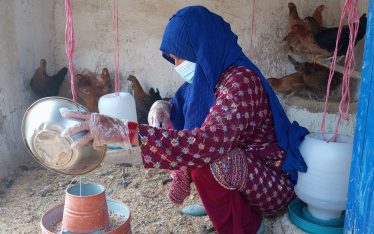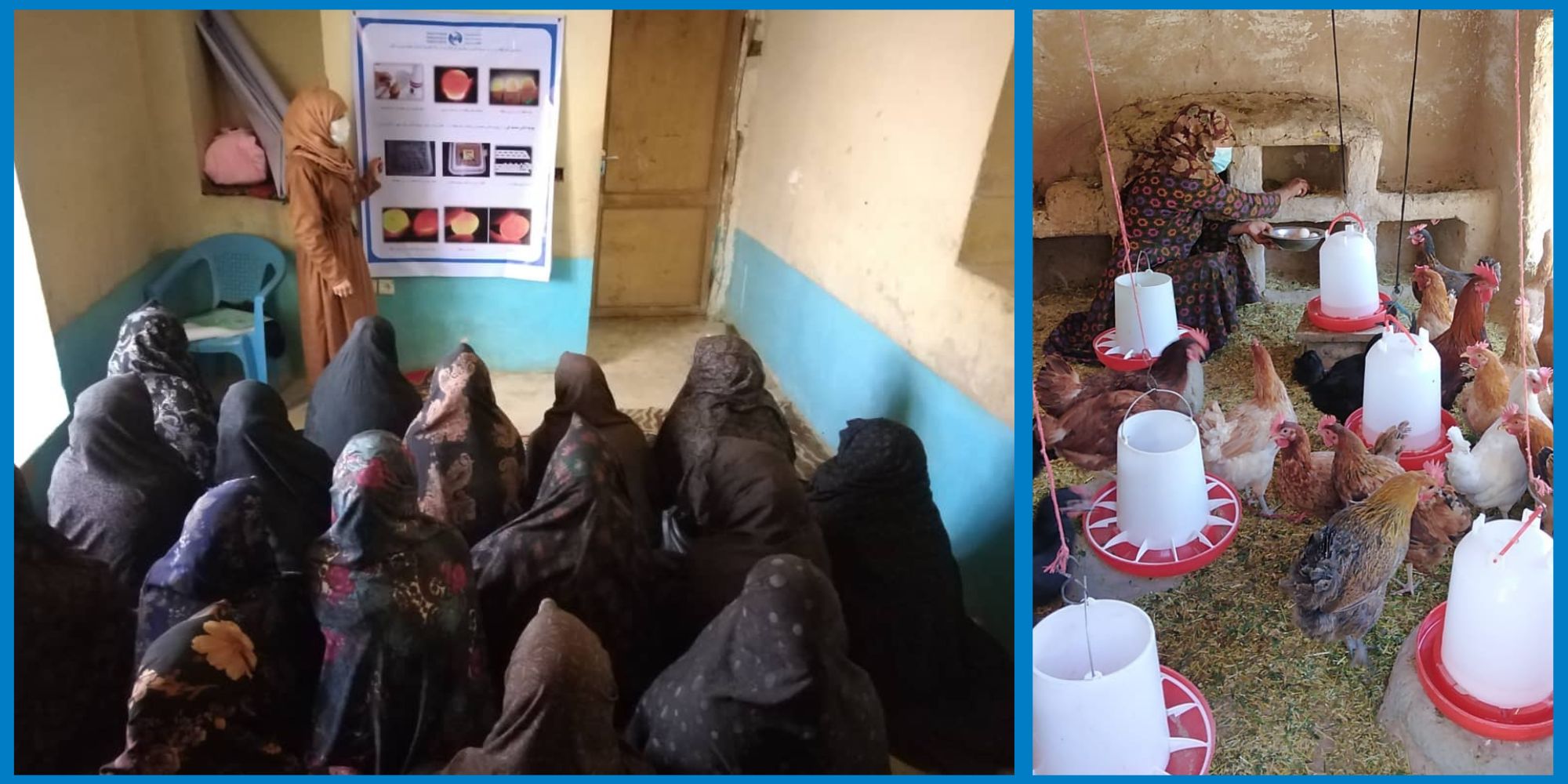
Kubra, a 39-year-old woman, lives in Fashkan village, Pashtun Zarghoon district, Herat province. She is the mother of four sons and two daughters. Kubra joined the project “Creating economic opportunities for 1050 poor families through an inclusive poultry farming value chain and building their capacity in Shindand and Pashtun Zarghoon districts of Herat Province”. She started her own small chicken farm with 30 chickens that she received from HIHAO as part of the project.
Kubra received poultry training on how to raise chickens, care for them, and vaccinate them. She also learned about poultry farming systems, nutrition, water, diseases, primary care, and marketing. Thanks to this project, Kubra was able to start his small business.
Kubra says about her life before she joined this project: “Before joining the project, our life situation was very bad; my husband is a farmer, and a year ago, his hand suddenly became numb and disabled. He could no longer work as before and continue farming. In order to advance our lives, we had to send my eldest son, who is 17 years old, to work in Iran, and I had to do embroidery to advance the household expenses, even though he earned very little. We were still moving forward with life with its difficulties and hardships, and by the way, the Hand in Hand Afghanistan Organization took over the project of creating employment for the poor in our village, and fortunately, it included me, and I have been included in the project.
She talked about the positive changes in his life and said, I now have a business, and I earn about 3000 to 4500 AFN per month. I earn 100 to 150 AFN daily from selling eggs, and I advance our living expenses. Our living situation is improving.
Kubra is content that she was able to quickly generate cash through the selling of eggs, cover her living expenditures without concern, and improve the lives of her kids.
To increase her income, Kubra intends to grow her little firm by selling eggs, raising chickens, and setting up a sizable farm. Also, she wants to teach her female relatives in Afghanistan what she has learned through the HIHAO program so they may establish their small businesses and support their families financially and get out of poverty.
She concludes by advising other women to start their businesses if they want to raise their families in an environment free from poverty. She also expresses gratitude to the HIHAO and the donor for their assistance and cooperation in empowering and providing employment for the women in her community, and she asks HIHAO for more assistance to raise the standard of living for the residents of Feshkan village.